
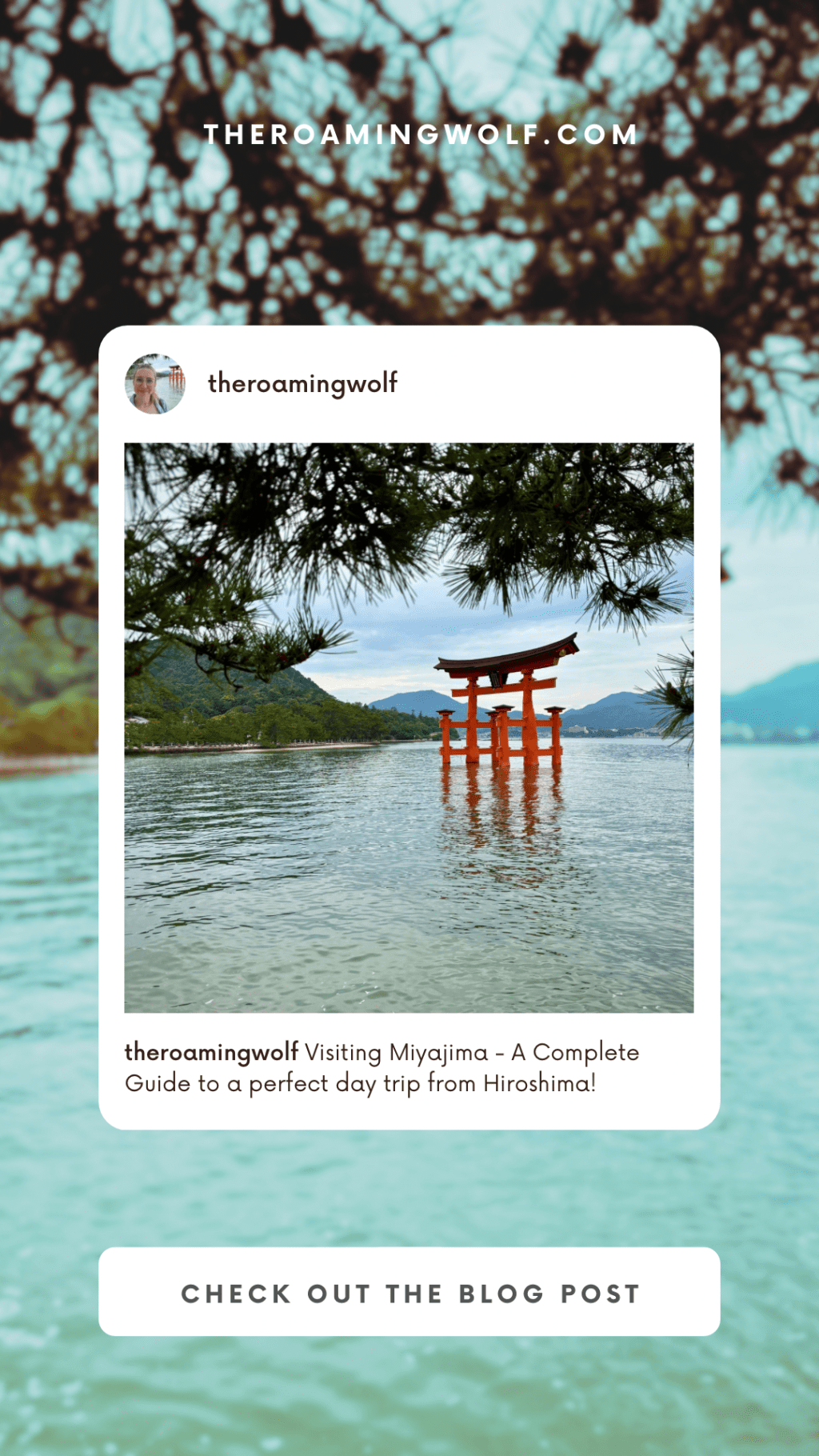
Miyajima, which is actually called Itsukushima, is a small island located less than an hour from Hiroshima city. It is most well-known for its giant, ‘floating’ Torii gate, listed as one of the three best views to see in all of Japan. The island itself has far more to offer as well- from the most stunning ocean views and forest trails, to beautiful shrines and sacred mountains, which make it a perfect day trip destination!
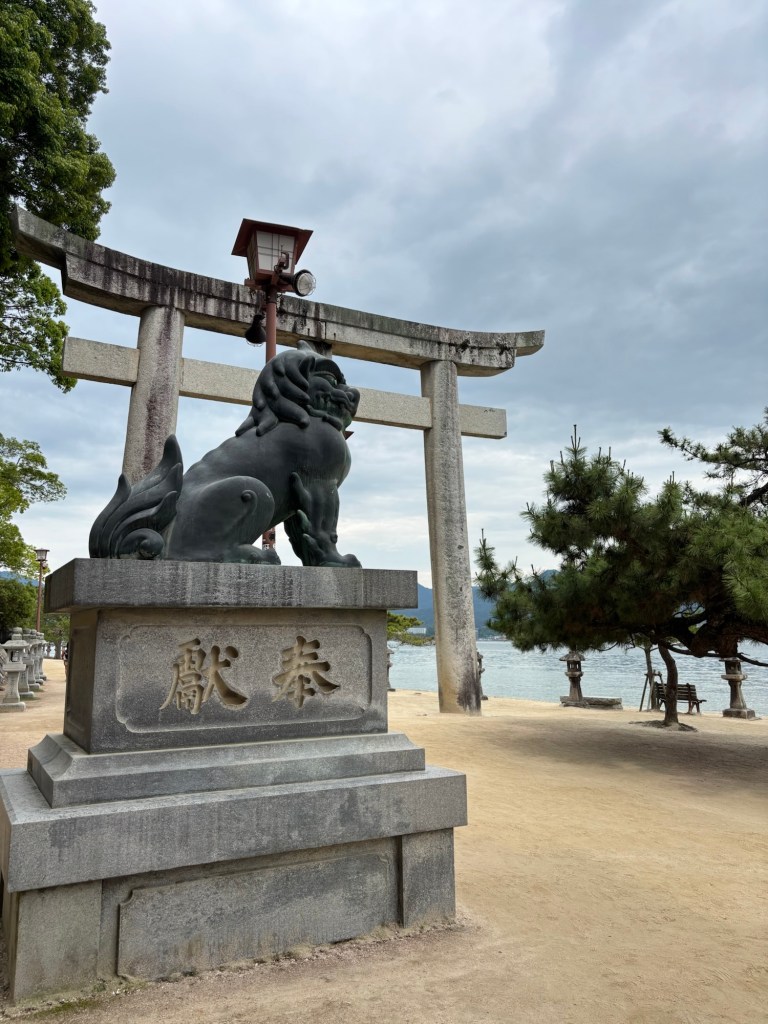
If you’re planning to stay in the area, Miyajima offers a peaceful and quiet atmosphere, as well as an opportunity to stay at a Ryokan – a traditional Japanese inn, famous for featuring tatami-matted rooms, communal hot springs and local Kaiseki dinners. Having said that, even though it’s large in size, there isn’t much to do on an island to warrant a long stay. As a result, I’d recommend checking out Miyajima as part of a day trip, staying instead in the nearby Hiroshima, with its wider choice of accommodation and dining options, as well as amazing public transport connections to Miyajima and beyond!
How to get to Miyajima
If you’re visiting the island directly from Hiroshima, you can take the JR Sanyo Line covered by the Japan Rail Pass (approx. 25-minute ride for ¥420 (2.30€/2.60$) one way), from Hiroshima Station to Miyajima-guchi Train Station. You can also take tram no. 2, which takes a little longer but costs less at approx. ¥240 (1.30€/1.50$), even if not covered by the pass.
From the station, it’s a quick walk over to the Miyajima-guchi Ferry terminal. With ferries departing often and only taking 10 minutes to reach the Itsukichima island, you have a choice of two companies to go with, JR and Matsudai. Tickets for both can be purchased then and there at about ¥200 (1.09€/1.25$), plus additional visitor’s tax.
A more direct, however more expensive, option is to take the ferry from Hiroshima Peace Park straight to Miyajima terminal, taking approx. 45 minutes with a price of ¥2,200 (11.95€/13.80$).
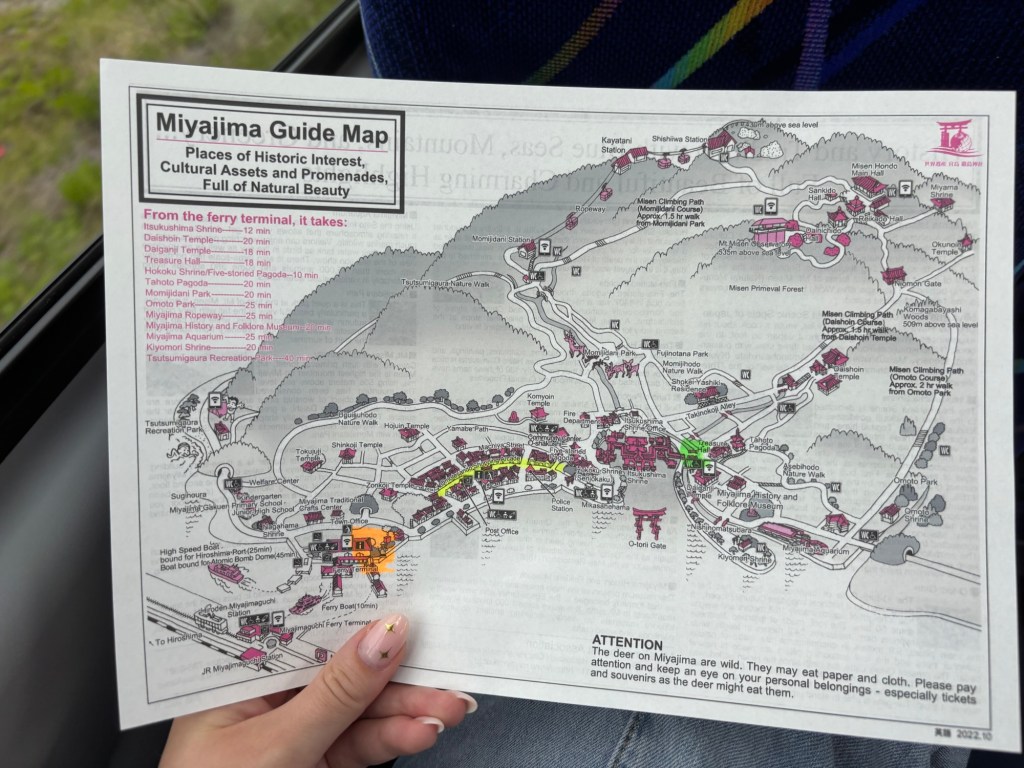
The ferries run throughout the whole day, so there are plenty of options that’ll suit your needs! Once you do reach the island, have a look at the map below to check out the most notable things to do.
The best things to do in Miyajima
Itsukishima Shrine and the floating Torii Gate
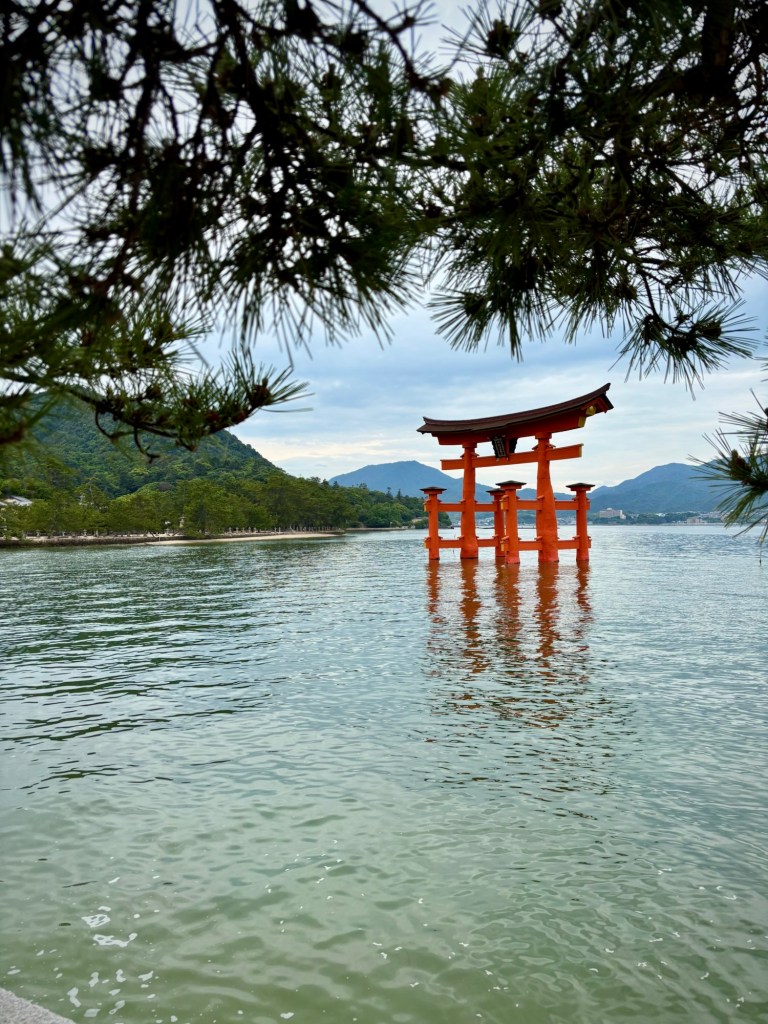
Located only a short walk, 5-10 minutes or so, from the ferry terminal, the floating Torii Gate is the main attraction and reason that many, including myself, visit Miyajima. This well-known and picturesque Torii Gate appears to be floating on the sea only during high tide. During low tide, you are able to walk up to its base, a little over 200 metres, on the sea floor. It stands at 16.8 meters tall and is made from rot-resistant camphor wood. The current structure was built in 1875, featuring a four-pillar Ryobu-torii style, providing stability in the sea. Torii gates are believed to act as gateways, marking the boundary between the humans and spiritual realms. Acting as ‘gate’ between heaven and earth, and humans and deities, the floating Torii Gate in Miyajima also represents the boundary between land and the sea. When it was first build, in 1168, it served as the main entrance to the Itsukushima Shrine. The island was believed to be a god itself, and so making any construction on it was not welcomed. As a result. worshippers visiting the island would pass through the gate via their boats, and while it’s not required to do so today to get into Miyajima, it remains a popular tourist activity.

The Itsukushima Shrine complex is also built over water, founded in 593 and expanded in 1168. It has an extensive history behind it, which I’d like to invite you to read on the shrine’s official website. My recollection of it could not do it justice. Dedicated to the deities of marine, today it consists of multiple buildings connected via boardwalks.
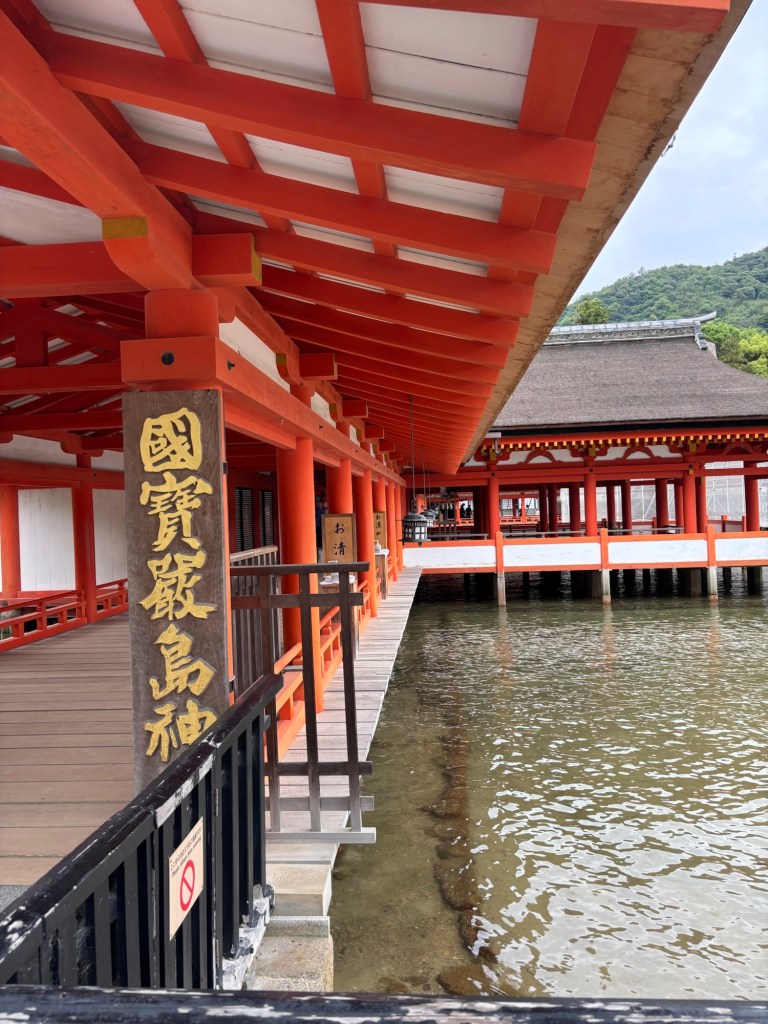
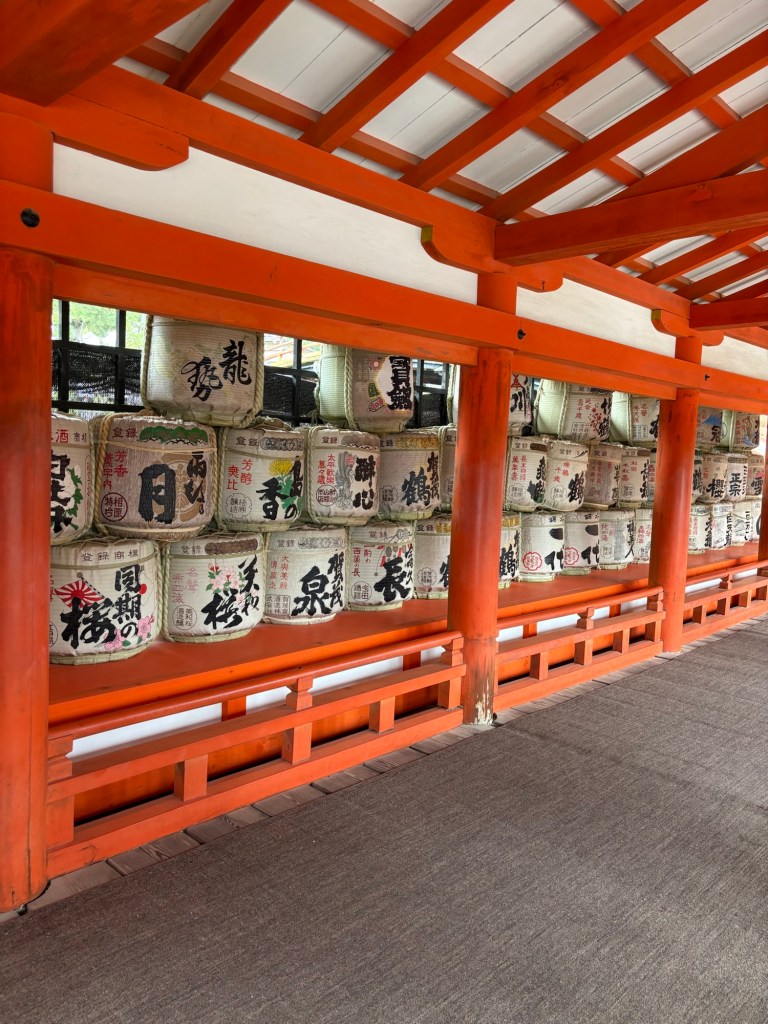
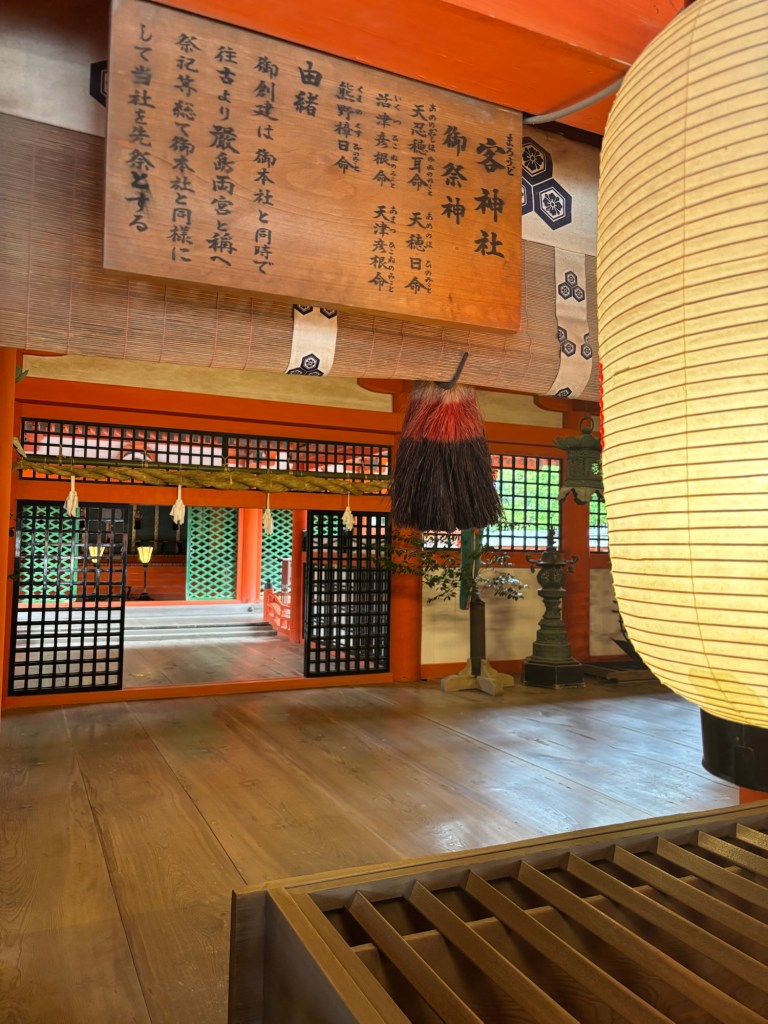
The shrine is open year-round throughout the day, and an entry ticket starts from ¥300 (1.63€/1.88$). If you’re looking to stay on the island after dark, up until 11pm, you can check out the illuminated shrine and the Torii gate. While visiting the shrine, I had an amazing opportunity to witness a marriage ceremony taking place in one of the halls. What an incredibly beautiful place for locals to do it in!
Note: Please be aware of the timings of the tides prior to your visit, depending on which view of the Torii gate and the shrine you’d like to experience. Additionally, please note that the 5-story pagoda left of the shrine is currently undergoing renovations till end of December 2026. For most up to date information, please check out the relevant websites.
Omotesandō Shopping Street
Packed with souvenir shops and eateries, Omotesandō Shopping Street offers visitors an opportunity to purchase or try out some of the local crafts and specialities. Keep an eye out for Miyajima-zaiku (woodcraft), including engraved ride paddles. The shopping district also offers a variety of other items, such as clothes and tea towels, and of course, Torii gate miniatures, to bring home with you. This traditional street not only has an incredibly cosy feel to it, but also a variety of traditional street food to try. Some of the delicacies include grilled oysters, a speciality of Hiroshima prefecture, and maple-shaped cakes called Momiji Manju.
Mount Misen
For those of you who have a little bit more time on the island and are looking for an adventure, I’d recommend visiting the view from atop Mount Misen. Walking up the mountain from Omoto park takes about 2 hours, while the descent is a little shorter, usually 1 hour and 30 minutes. The trail is hilly and so might not be for the faint of heart; however, don’t you worry, there’s an alternative! You can use the ropeway to reach the top to enjoy the panoramic views. There are two lines operating throughout the day at regular intervals, so you shouldn’t miss it! Please check out the website for the most up-to-date information!
Daishō-in Temple
This historic temple build in 806AD serves as the entrance towards Mount Misen. It is a Shingon Buddhist temple, linked to the Imperial Family, housing a Reikido hall filled with hundreds of Rakan statues wearing knitted hats. The temple is located about 20 minutes walk from the ferry terminal, near the Itsukushima Shrine, and is open throughout the day, with free entrance.
Hokoku Shrine (Senjokaku Pavilion)
Located right next to Itsukushima Shrine, Hokoku Shrine is an unfinished, wooden building built in 1587 to serve as a chanting hall. It holds over 800 tatami mats and is a nice place to visit while on the island, for a quieter moment of reflection. The entry fee is ¥100 (0.54€/0.63$). Right beside this shrine, you can also find the 15th-century 5-story pagoda. Its vibrant red and elegant design was originally constructed in 1407, nowadays offering stunning views to the visitors, particularly during the cherry blossom season.
Note: The interior of the pagoda is not open to the public. Additionally, during my visit in 2025, the pagoda was undergoing restoration and was covered up on the outside as a result. I believe it still remains so, so please check the most up-to-date information for it.
I hope you found this mini guide helpful! My trip to Miyajima was incredible, enjoyed every minute of it. Just having a stroll around the island, amongst beautiful architecture and breathtaking scenery, surrounded by wild deer, was a moment to treasure.
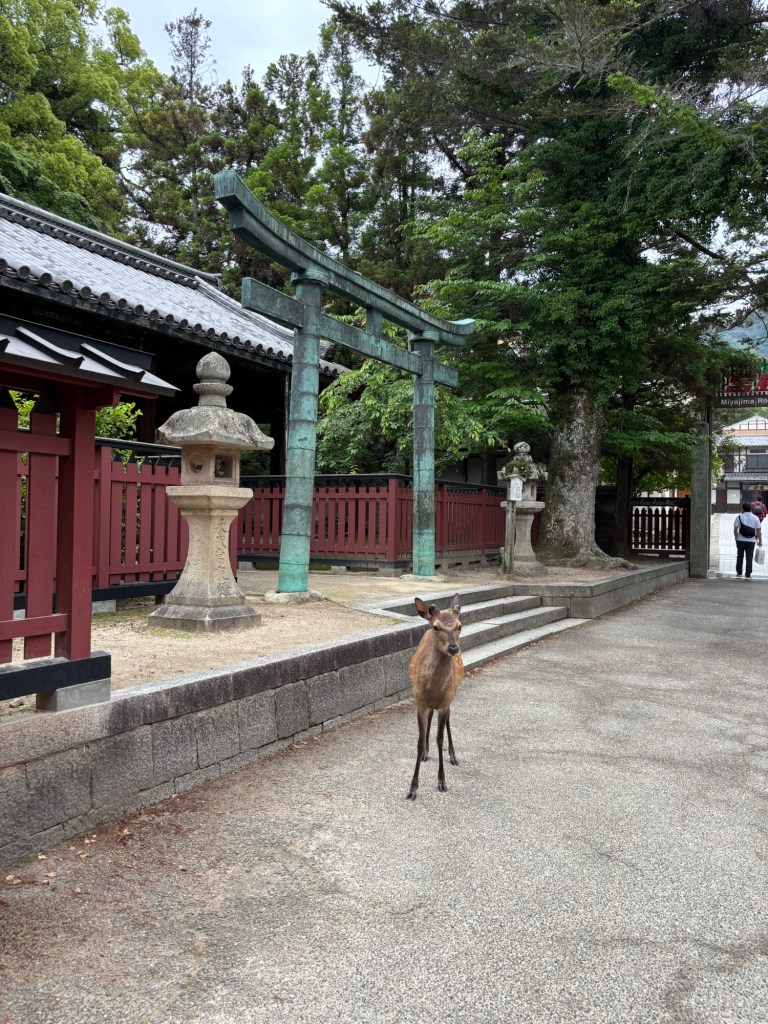
If you’ve been to Miyajima, how was your experience? Is there any other activity or site you’d recommend checking out? Let’s hear about it in the comment section below!


Leave a Reply