Have you ever wondered what life would be like, what would you be like, if your name were different? Would you be the same person you are now, or someone else entirely?
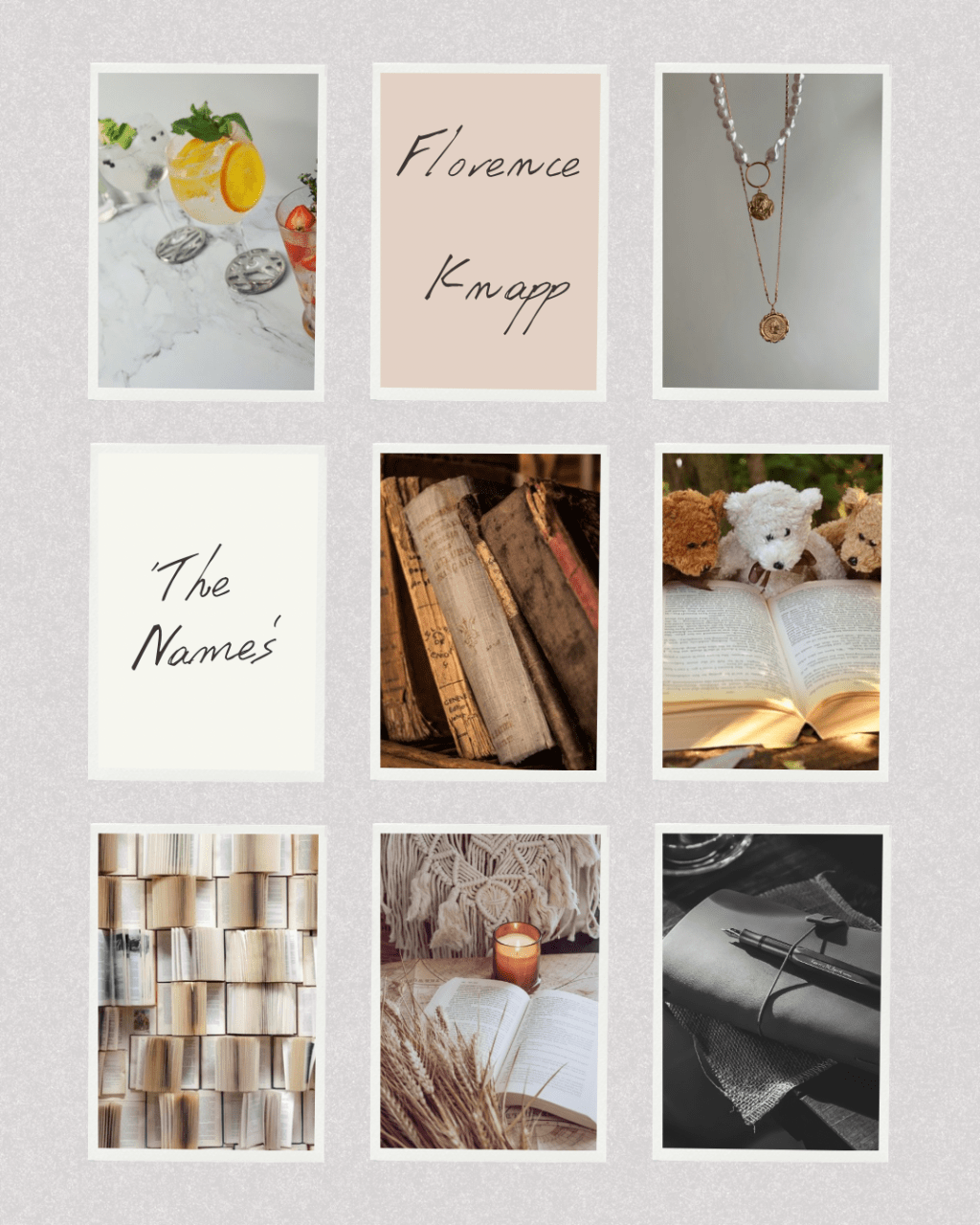
Florence Knapp takes these questions and puts them at the core of her debut novel, ‘The Names’.
Following a storm, Cora, alongside her nine-year-old daughter Maia, sets out to the registrar’s office to register the birth of her son. However, when the time comes to assign his name, Cora hesitates.
The obvious, and seemingly the only, choice is to name him Gordon, after his father. As a show of respect to their long-standing family tradition. Cora’s husband is a well-respected doctor and a liked man within the local community. Known for his good-hearted and kind nature. What happens behind their closed doors, however, remains known only to them.
Since her daughter’s name translates to mean ‘mother’, Cora’s choice would be to name the baby Julian, which means ‘sky father’, perhaps in ode to transcend his troubled earth father.
If it were up to Maia, he’d be named Bear, so that her brother grows up to be soft, cuddly and kind, but also strong and brave.
Cora’s last minute choice of name creates three alternate timelines that shape the lives of her, her children and husband, but also people around them.
‘The Names’ explores those alternate paths over a span of 35 years, going over the topics of domestic abuse, identity, healing, the mess that family ties can be, and what could have been.
“That maybe freedom is just about choosing the life you want. Even if that life’s in one place, doing the food shop together. Arguing over who forgot to buy loo roll.”
Can a name you’ve been given determine who you are?
To determine it fully, I don’t think it can. Having said that, your name can definitely influence the perception of you – the first impressions and how others see you – and therefore influence a part of who you are.
I’m sure many of us either heard or said something along the lines of ‘I don’t like this name, it reminds me of…’ or ‘that name suits them’. There are names that are more stereotypically feminine or masculine-sounding, and certain personality traits might be expected of them, e.g. more nurturing nature or softness that the name sometimes carries. Unfortunately, still to this day, you might be pre-emptively judged for having a name reflecting your culture and ethnicity.
So, while it is your choices and experiences that define your character, it is undeniable that your name has, to a lesser or greater extent, an influence over the perception of you.
My mom’s chosen name for me was Anna. It has biblical ties to the figure of a mother and is associated with simplicity and grace. Something I myself don’t have. An unfortunate passing of a close family member during her pregnancy shaped my mom’s choice of my name, changing it to Joanna, in their honour. A name associated with being supportive and gracious – showing compassion and kindness to others, which coincidentally (or not) aligns with who I am today.
I was born in Poland, but I’m Irish now, too, where my name variation would be Siobhán. A regal name, carried proudly and elegantly by multiple Irish queens, something I don’t think I could do either.
Due to this little history in my own life, I resonated highly with the premise of ‘The Names’ by Florence Knapp. It is a story to ponder, a story of one family and the infinite possibilities from each and every decision made.
Following the initial introduction, the story splits into the three pathways, alternating between Bear, Julian and Gordon. The narrative proves complex as you follow all three, to the point I had to take notes to remember what happens in each. It’s a little hard to follow, but it is done well. There are subtle connections between the stories that make you stop and think deeply about the ‘what if’. An example of this is a significant event that happened in France that injured a character in one story, but in the alternative life, she never left to go to France, so she only heard about it on the news.
“She’s been given a life, but she has somehow failed to spend it.”
I think this is one of those open-ended novels that some people dislike, but I love. The message is there if you are willing to listen and linger on what’s shown to you, even if it’s not stated outright. It’s a heartbreaking story wrapped in a creative narrative of a topic that resonated deeply with me.
It is messy, it is chaotic, it is made of mistakes and good moments and it is what makes it true to life.


 The Roaming Wolf
Leave a reply to amidlifeadventure Cancel reply